Host Awareness and the CLI domain
Write this so someone with no background can follow.
What do I need?
PlayTime (the Scriptbook engine) plus this Equivalence Engine for two different jobs.
Two jobs, not one loop
| When | Job |
|---|---|
Build (CI) |
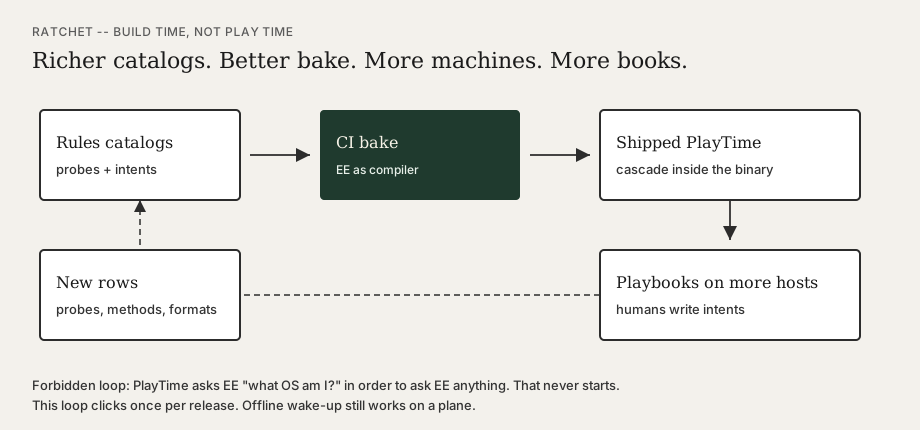
The engine is a compiler. It reads host-probe rules and writes an ordered cascade into PlayTime ( |
Run (play time) |
PlayTime walks that baked cascade and fills a Host Identity Record. Only then may it call this engine for |
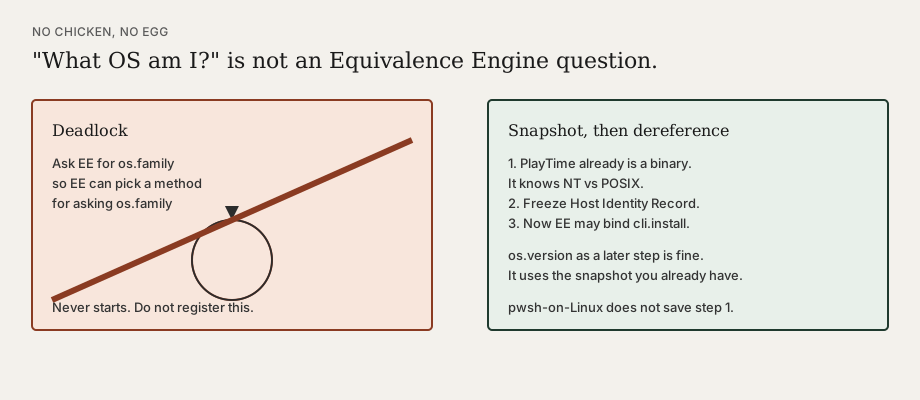
Forbidden: PlayTime calls this engine to learn family so that it can call this engine. That never starts.
Wanted growth loop: catalogs get richer → CI bakes a better cascade → PlayTime wakes up on more machines → people write more playbooks → they register more intents and probes → the next bake is richer.
Canonical write-up: scriptbook spec/host-awareness.adoc.
family / inherits on filesystem context.sdl files must stay aligned with that record.
CLI domain is a catalog, not a rewrite DAG
--domain code walks version hops and rewrites files.
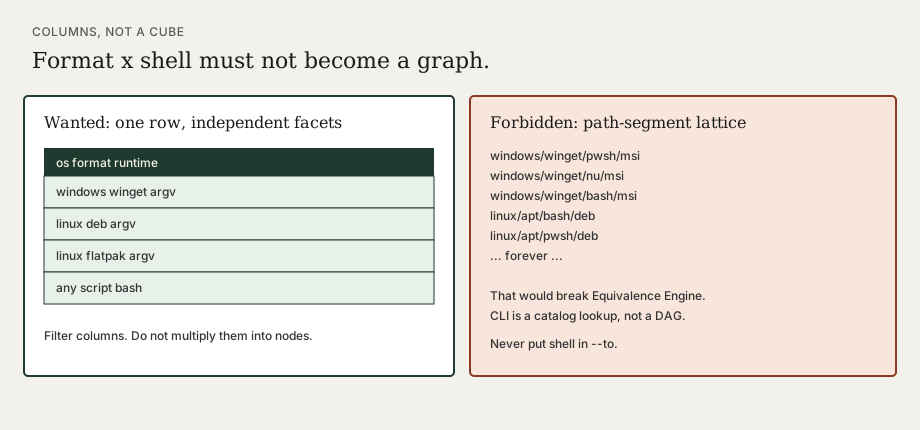
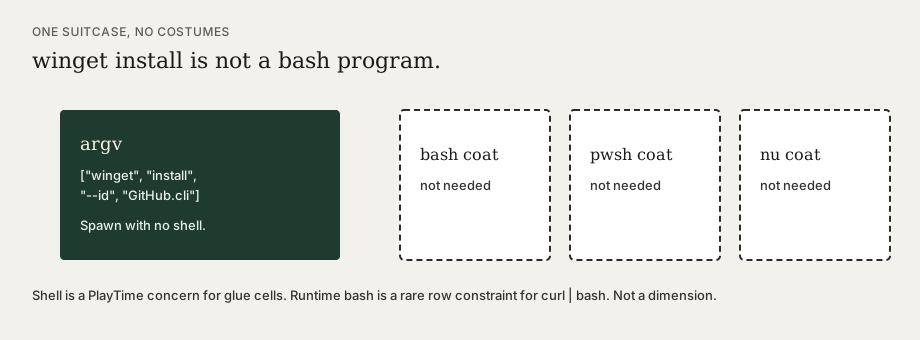
--domain cli looks up a tool id and returns command rows. --to is a host alias such as windows/winget. Never --to windows/pwsh/msi.
List every compatible row (do not only pick one):
equivalence-engine --domain cli --list gh --rules-dir /path/to/catalog
Optional --to still picks one. Optional format filter is --format winget (a facet), not a path segment.