Why a generic config panel
A config file without a schema is a photograph of the keys someone happened to need. The rest of the legal vocabulary — enums, defaults, descriptions — lives in docs, provider plugins, or someone else’s example.
Linux already solved this for opt-in apps: GSettings schemas plus dconf-editor, or KDE KConfigXT. Windows Group Policy templates do the same from ADMX. Developers get a weaker cousin: SchemaStore plus editor completion.
Nothing trustworthy sits in the middle: open this Terraform tfvars, that dub.sdl, that .gitconfig, register them after touch, and keep the same panel widgets.
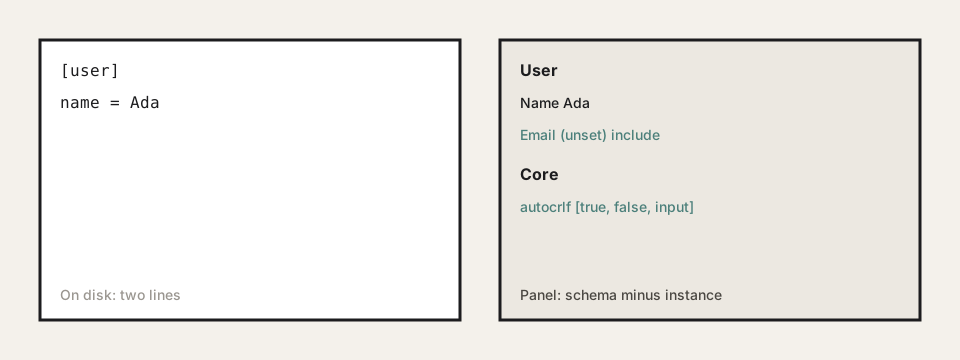
UniConfig treats that gap as the product:
-
On-the-fly — open a file, infer types from what is present.
-
Register after touch — the left tree remembers paths in
registry.sdl. -
Catalog — SDLang profiles map globs onto JSON Schema so unset fields appear.
The hard work is not the widgets. It is round-trip plus schema adapters. HCL programs and for_each stay out of v0.1; .tfvars assignments are in.
Related HCI argument (settings as bound work, not a warehouse): When settings live across town and the companion When config files withhold the vocabulary.