Abstract playbooks
Write this so someone with no background can follow.
What do I need?
A .cmk playbook (CentrMark file). The Scriptbook app. PlayTime (the engine inside Scriptbook). The Equivalence Engine plus its CLI catalog, for install steps.
You do not need a bash-to-PowerShell translator. That is the whole point.
- Companion essay
- Contracts
- OpenShellOrg cousins
The idea in one kitchen
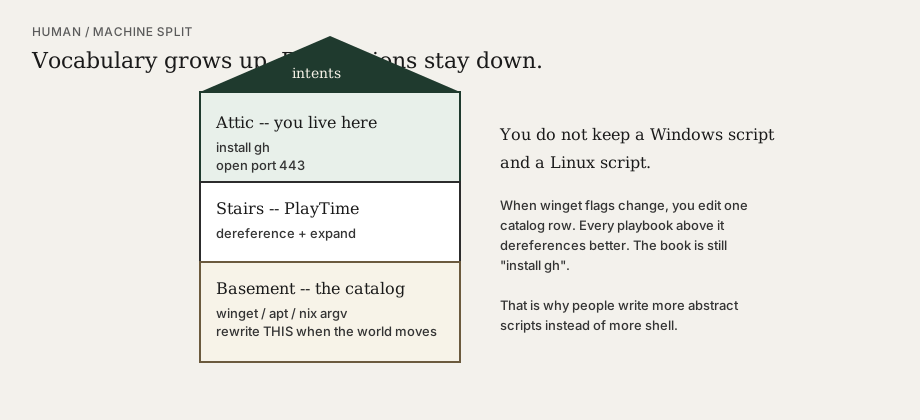
A playbook is a recipe written as a document. Each step says what you want: install this tool, put config here, check that it worked.
CentrMark is the file format (.cmk). It is only writing.
PlayTime is the kitchen. It looks at this computer, asks the Equivalence Engine for the matching command, runs it, and writes a sidecar (a run record next to the file). It never rewrites the recipe.
Scriptbook is the waiter. Today that is the scriptbook CLI. Later it is also a DevCentr screen. It opens the book and talks to you.
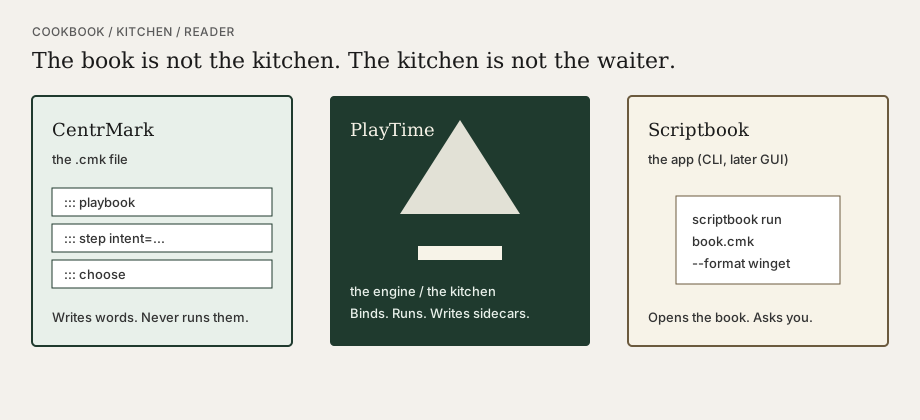
- Keep the word playbook for the document (`
-
playbook`). PlayTime is the moment it runs.
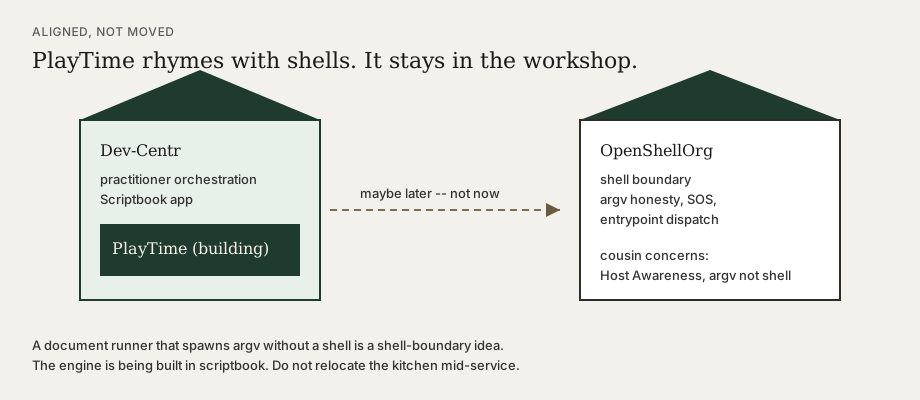
Do not split PlayTime into a new GitHub repo yet. It is the library in dev-centr/scriptbook. The binary stays scriptbook. OpenShellOrg may be a better long-term home for a document runner that spawns argv (program + args, no shell). That move waits. The kitchen is mid-service.
The wrong default: hot-replace
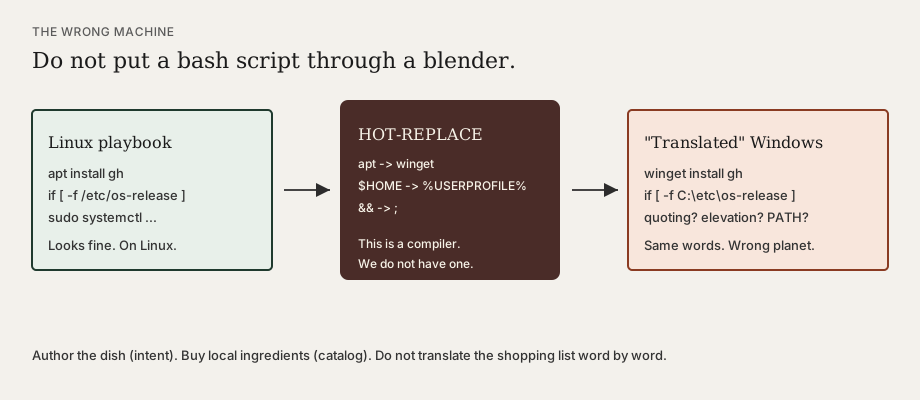
People often want one script that works everywhere. The trap is to write bash, then ask a machine to rewrite apt into winget inside the same file.
That is a shell compiler. Quoting, elevation, path separators, and package side effects do not survive string substitution. Equivalence Engine’s code domain walks library versions. It is not a bash-to-pwsh path.
Portable glue can stay Nushell. Scriptbook already prefers nu when shell=auto. OS-native work should be an intent, not a dialect.
The right default: bind
Author a procedure of intents. An intent is a registered name plus arguments, for example cli.install + tool gh.
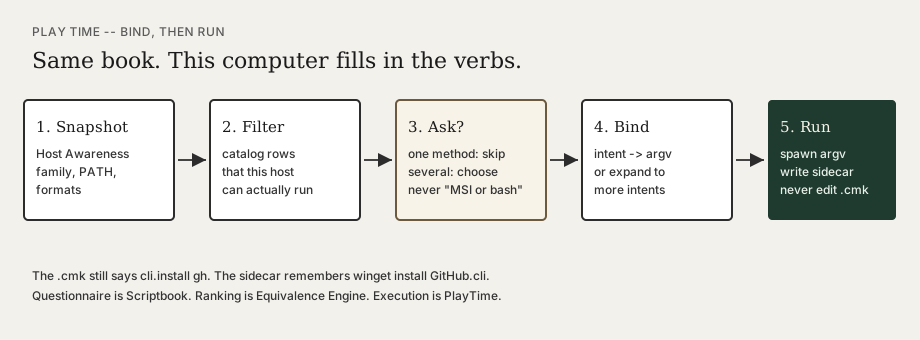
At play time (when PlayTime runs the book):
-
Take a host snapshot (Host Awareness). Freeze it.
-
Filter catalog rows this host can run.
-
If more than one method remains, ask (or take
--format). -
Bind the intent to argv, or expand it into more intents.
-
Run. Write the sidecar. Leave the
.cmkalone.
Two layers that look similar but are not:
| Layer | Same process? | Example |
|---|---|---|
Realization |
Yes. One step, different command. |
|
Method choice |
Same goal. Extra satellite steps. |
AppImage needs a desktop file. MSI needs elevation. Flatpak does not need PATH surgery. |
The spine is almost always: detect → acquire → configure → verify. Windows vs Linux does not usually need two playbooks. Rare true forks (GPU drivers, tray app vs service) get when-context= or two books that share narrative.
Who asks, who binds
| Piece | Job |
|---|---|
Equivalence Engine + catalogs |
Vocabulary of intents. Filter and rank methods. Ground argv or expand-to-intents. Never parse |
PlayTime |
Snapshot the host. Call the engine. Execute. Sidecars. |
Scriptbook |
Open the book. Questionnaire UX. |
CentrMark must not call the engine. The engine must not parse CentrMark. That stops "is EE a script translator now?"
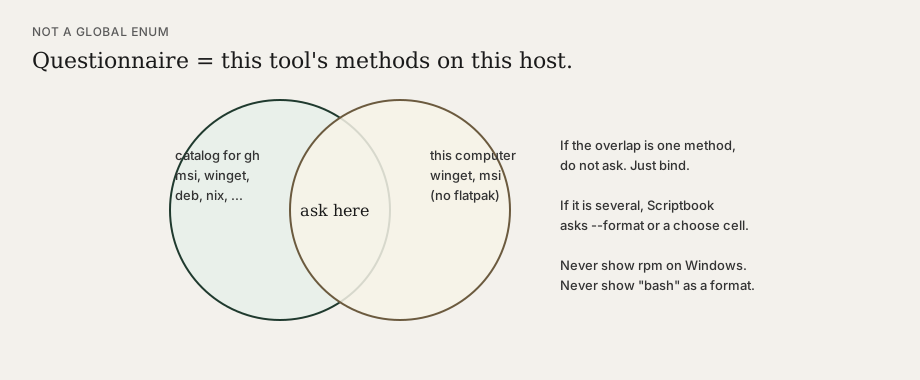
Questionnaire is a Venn diagram
Do not put every Linux package format in the playbook language. The catalog owns formats per tool.
Show the user: this tool’s methods ∩ this host’s capabilities. Ask only if that set has more than one member.
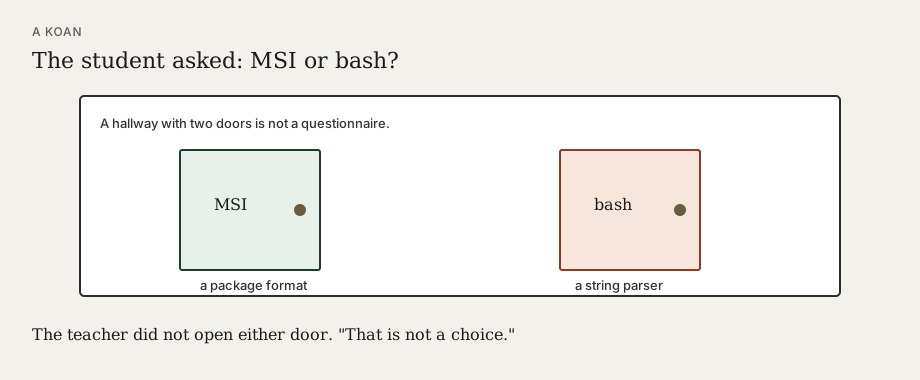
Koan: MSI or bash?
Format is which installer (msi, deb, flatpak, winget, …).
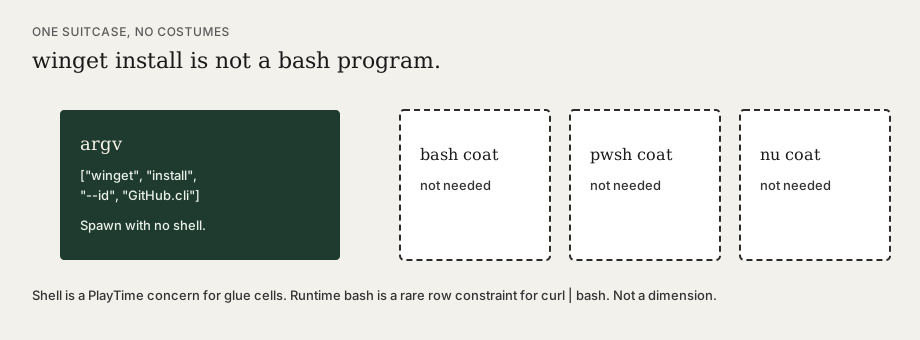
Shell is how a string would be parsed. Almost never an Equivalence Engine axis.
Runtime is a rare constraint: this method is a script (runtime bash for curl | bash). Filter the row if bash is missing. Do not multiply it by format.
winget install GitHub.cli is argv. Any shell can spawn it. Prefer spawning it with no shell. You do not need winget-in-pwsh, winget-in-nu, and winget-in-bash as three equivalent things.
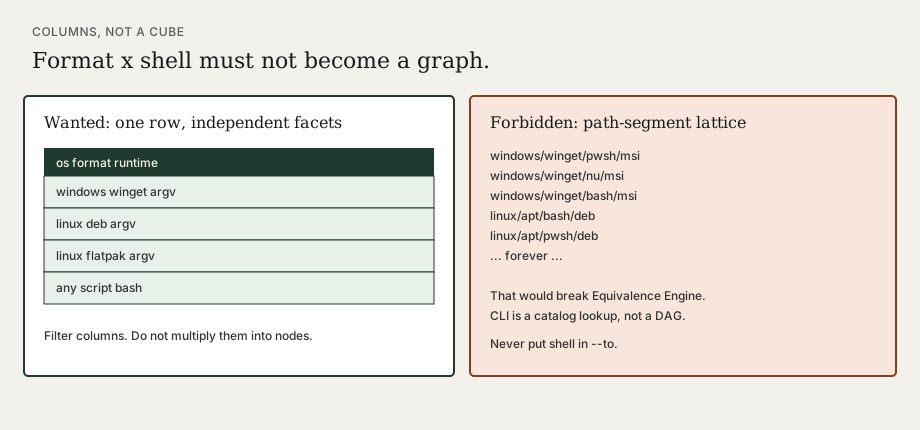
Format x shell is not a graph
Equivalence Engine already has two machines. People mix them up.
| Domain | Mechanism | An edge means |
|---|---|---|
|
Shortest path, then rewrite |
Version 5.15 → 6.0 transform |
|
Lookup + inherit |
This host key is more specific than that one |
CLI install was never "migrate this bash to pwsh." It is intent + host → a catalog row. Putting shell in --to (windows/pwsh/msi) would explode into a lattice. That would break the engine. So we do not.
If we later want ls ↔ Get-ChildItem, that is a separate shell/cmd domain. Installing a .deb does not change what ls means.
Register, then dereference
Abstract instructions live in Equivalence Engine definitions. A playbook step names an intent id. The engine returns either:
-
Ground — argv (preferred) or a required-runtime script. Bottom. Stop.
-
Expand — a list of other intent calls (not a
.cmk). Recurse.
Unknown intent = author error, not another nesting level.
Do not expand cli.install into "find OS, then find winget, then install." The snapshot already found the OS. Expansion is for compound operations (AppImage → download, chmod, desktop file).
Human playbooks may include other books for narrative. Equivalence Engine must not parse CentrMark. Those are two different loops.
Host Awareness (bootstrap is not an intent)
PlayTime must know the computer before it asks the engine for commands. Using the engine to answer "what OS am I?" in order to pick the "what OS am I?" command is a cycle. So we do not.
Host Awareness is the bootstrap contract. Every probe fills a Host Identity Record:
family, distro, like[], version, arch, overlays[], caps (shells, package managers, formats).
There is no world get_os() API. Close cousins already exist: POSIX uname, Freedesktop /etc/os-release, Windows RtlGetVersion, Darwin sw_vers. We sit on those.
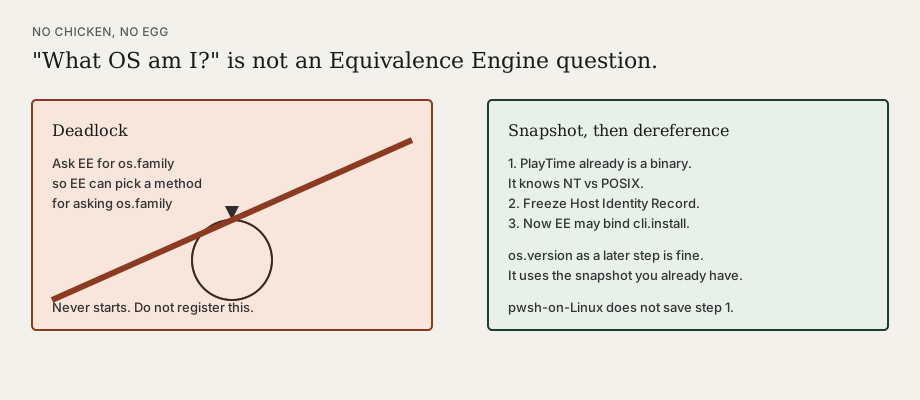
Probe kinds are code in PlayTime (compileTime, uname, osReleaseFile, ntVersion, pathHas, and command as escape hatch). A table cannot invent a new kernel ABI.
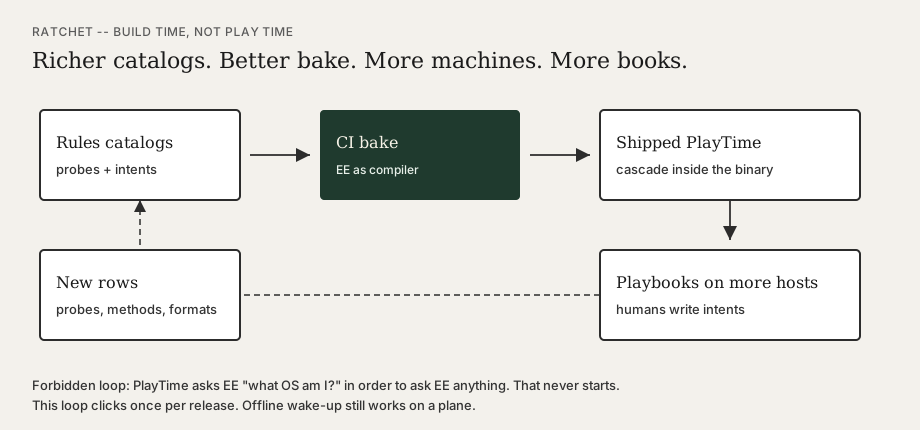
Probe table is shared data. CI runs Equivalence Engine as a compiler and bakes an ordered cascade into the PlayTime binary. Pin the rules git revision. Runtime PlayTime does not call the engine to learn family.
PowerShell-on-Linux does not save bootstrap. $IsLinux only works if you are already inside pwsh. PlayTime is not. Shells can anchor ground methods after a runtime exists. They cannot tell the engine which planet it is on.
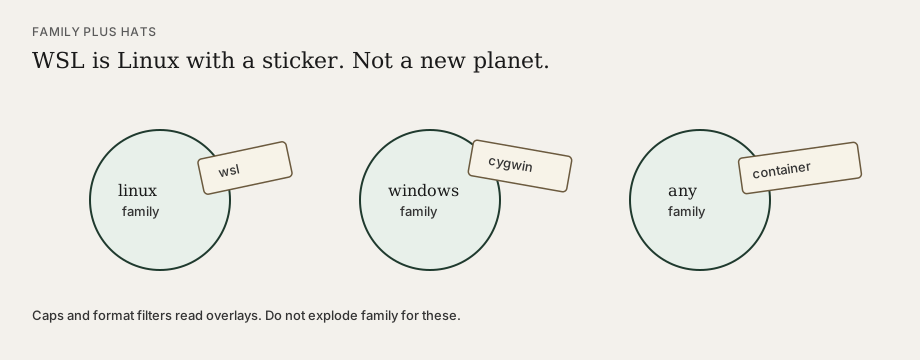
WSL is Linux plus overlay wsl. Cygwin is Windows plus a POSIX hat. Containers are an overlay on whatever family. Not new planets.
The growth loop (wanted) vs the deadlock (forbidden)
Forbidden: PlayTime calls the engine to learn family so that it can call the engine. That never starts.
Wanted: catalogs get richer → CI bakes a better cascade → PlayTime wakes up on more machines → people write more playbooks → they register more intents and probes → the next bake is richer. Each release is a ratchet.
Humans live at the intent layer. When winget flags change, you rewrite one basement row. Every book above it dereferences better. You stop maintaining a Windows script and a Linux script.
A new Unix-like distro that speaks os-release is data (next bake). A kernel that is neither NT nor POSIX needs a new probe kind in PlayTime, then a table row. That is "register with us": fill the record, not an os.family intent.
Ship PlayTime able to detect Windows, Linux, and macOS offline. Empty-engine-plus-network-rules would recreate the cycle on a plane.
Authoring sketch
::: playbook [id="install-gh" shell="auto"]

::: choose [id="pkg-format" prompt="How should we install gh?" intent="cli.install" tool="gh"]
:::

::: step [id="install" intent="cli.install" tool="gh" bind="pkg-format"]
:::

::: step [id="desktop-file" when-answer="pkg-format=appimage" intent="desktop.install"]
:::

::: step [id="verify" when="install"]
```
gh --version
```
:::
:::
Concrete script cells stay valid. Mixed books are the sweet spot: Nushell for glue, intents for OS-native ops.
What we will not do
-
Bash ↔ pwsh translation via Equivalence Engine
code -
Context paths that include shell (
windows/pwsh/msi) -
One catalog row per
(format x shell)pair -
Equivalence Engine parsing
.cmk -
os.familyas the intent that starts a run -
Moving PlayTime to OpenShellOrg while it is being built
Where the pages live
| Place | Job |
|---|---|
This page |
Vision plus the model, with pictures |
scriptbook |
Directives, sidecars, Host Awareness contract |
Product pointer (not SLP, not shell translation) |
|
Bake vs run; |
|
Inward tour of the same system |