Curated watching (AI)
Short list of high-signal videos worth watching before (or while) using AI day to day. Prefer this over stuffing profile READMEs; add entries when something is fundamental enough to share across Dev-Centr.

How this list grows
-
This page is an index. A handful of entries may live inline (as below). When the set grows, split into topical pages under
explanation/ai/(one topic, many resources) and keep only titles + one-line pointers here. -
Other docs link to topical pages (or a single resource page), not to this index, when the link is about that topic.
-
Personal profile indexes stay separate. A GitHub profile curated list should keep its own stable video entries (title, URL, short note) and deep-link into Dev-Centr for blurbs/credits—those Dev-Centr URLs may move when topics split. Do not treat this index URL as the only durable personal bookmark.
flowchart LR
  P[Personal curated-learning.md]
  I[Org curated-watching index]
  T[Topical page]
  D[Other docs]
  P -->|deep-link blurbs| I
  I --> T
  D --> T
  P -->|title URL note Drive| YT[YouTube / Drive]
Mandatory
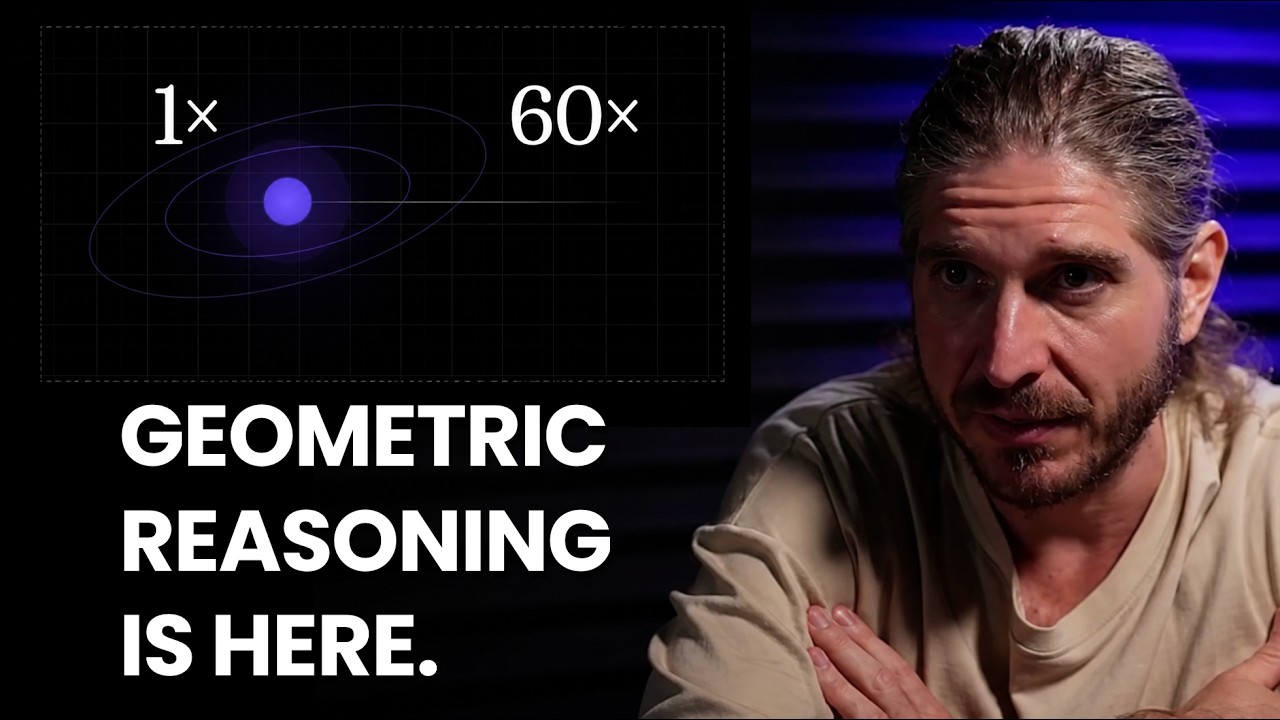
AI Data Centers Will Be Obsolete (Geometric Reasoning Explained)
 unchecked
| Field | Value |
|---|---|
Title |
AI Data Centers Will Be Obsolete (Geometric Reasoning Explained) |
Channel / publisher |
Sophontic AIunchecked |
Featured speaker |
Julian D. Michels, PhD (founder, Sophontic) |
Published |
6 August 2026 |
Runtime |
~53 minutes |
YouTube |
|
Project site |
sophontic.aiunchecked |
Local / Drive backup |
Google Drive copyunchecked ( |
- Blurb
-
Sophontic argues that reasoning is geometry in latent space, not an inevitable side-effect of brute-force scale. Michels contrasts statistical “paradigm of scale” training with empirically studying and cultivating internal geometries (neuro-symbolic lineage, perturbation / flip-rate evals, trainable compact reasoners). The interview frames why frozen frontier generalists and hyperscale data centers are a brittle monopoly path—and what changes if real reasoners can train and adapt on laptop-class hardware. Watch this if you use AI and want a clear counter-story to “just add GPUs.”
- Credits (as published)
-
Interview published on the Sophontic AI YouTube channel; featured interviewee Julian D. Michels, PhD. Primary source page embeds the same video: sophontic.aiunchecked.
|
Claims about magnitude gains (tens to ~10³× vs larger models under their perturbation tests) are the lab’s reported measurements, not independent Dev-Centr benchmarks. The value of the piece for practitioners is the mental model: structure vs scale, frozen giants vs continual local learning, and why evals that only score memorized tests are weak. |
Related
-
AI studio tooling catalog — what to install in the studio
-
Agent control planes — how inference stacks are arranged
-
Writing clear docs with AI — using agents without drowning in always-on rules